What soft washing is
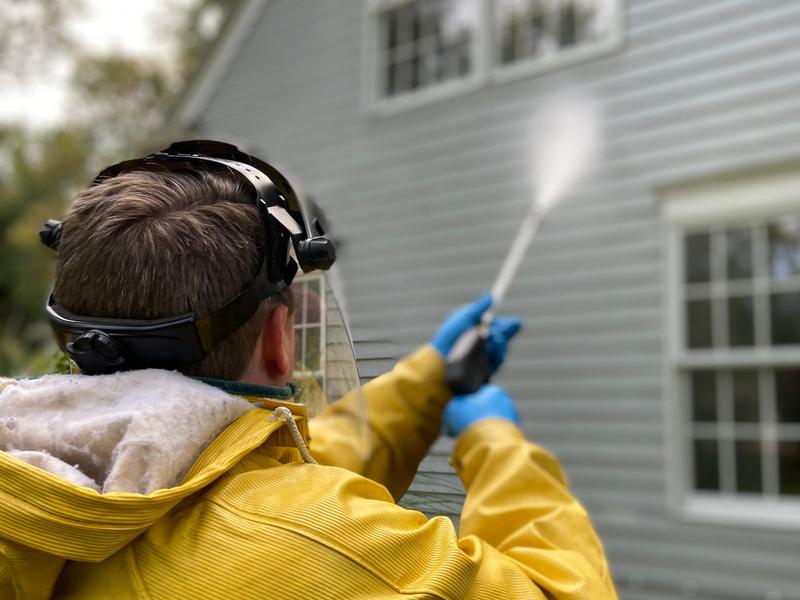
Soft washing cleans siding with low water pressure and a cleaning solution instead of brute force. The solution loosens dirt and kills the algae, mildew and lichen growing on the surface, and a gentle rinse carries it away. Because the growth is killed rather than just knocked off, it takes longer to come back. It's also far easier on paint, caulk, window seals and the siding itself than a high-pressure wand.
Regular pressure washing still has its place on concrete and other hard surfaces. On a house, the method should match the material.
Siding types and how they're washed
- Vinyl: the easiest to soft wash. High pressure can force water behind the panels, so low pressure is the norm.
- Fiber cement: very common on newer Seattle homes and townhomes. Durable, but a narrow high-pressure tip can scar the painted finish.
- Cedar and other wood siding: soft wood that gouges and fuzzes easily. It gets a gentle cleaning, and sometimes a brightener if it's going to be stained.
- Painted wood on older homes: washing can loosen paint that's already failing. If the house was built before 1978, the paint may contain lead, so ask the provider how they handle old paint before any washing starts.
- Stucco: porous and quick to stain. It's soft washed with a suitable cleaner; high pressure can crack or pit it.
- Brick and stone: mortar joints need care, and the white mineral deposits called efflorescence need the right cleaner, not more pressure.
Why Seattle houses turn green
Siding that stays damp for months and rarely sees direct winter sun is ideal ground for algae. That's why the north and east walls, the sides under trees and the walls closest to the house next door go green first, while the sunny south wall may still look fine. Black streaks under gutters and window sills are often mildew feeding on dirty runoff, and overflowing gutters make them worse. The dark stripes on the outside face of the gutters themselves can usually be cleaned on the same visit.
What a house wash usually includes
- Wetting or covering plants, and protecting outdoor outlets and light fixtures
- Applying the cleaning solution to siding, trim, eaves and soffits
- A low-pressure rinse of every treated surface
- Extra attention around entries, garage doors and under eaves, where cobwebs and grime collect
- Optional add-ons: gutter exteriors, decks, fences and driveways and walkways
Window washing is a separate trade for many providers. If you want it, say so in your request.
When to wash, and washing before painting
Late spring through early fall is the easiest time, since surfaces dry quickly and you're not racing the next storm. A wash works any time it's above freezing, though. If you're planning to paint, the house needs a thorough wash and several dry days before the first coat, so painters often ask for the wash about a week ahead. Many homeowners wash every year or two, and shaded walls more often.
Protecting plants, pets and drains
Ask which cleaning products the provider uses, how they protect landscaping and how they keep runoff out of storm drains, which around Seattle generally flow to creeks, lakes and Puget Sound. Keep pets inside until surfaces are rinsed and dry.
What affects the cost of house washing
- House size and number of stories
- Siding type and condition, including any peeling paint
- How heavy the algae, mildew and staining are
- Access around landscaping, decks and steep side yards
- Add-ons like gutter exteriors, decks, fences or driveways